
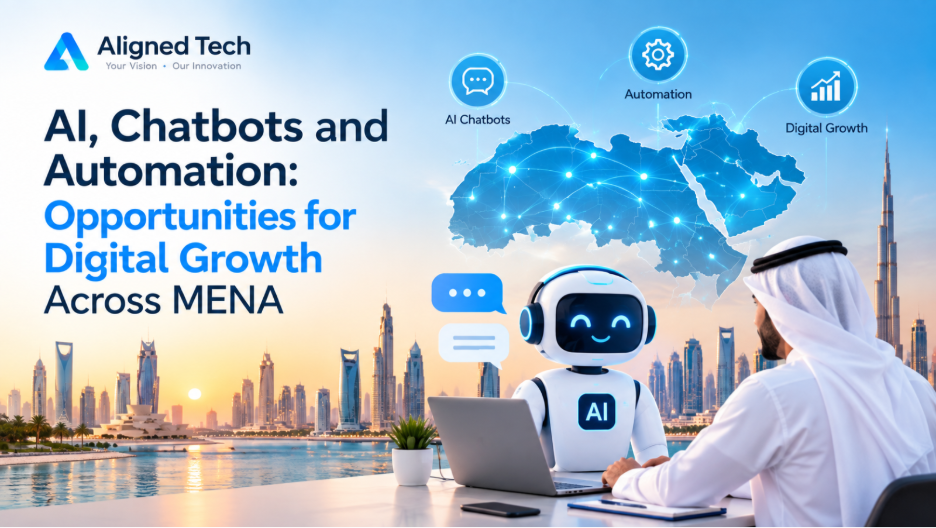
AI Chatbots and Automation
Introduction
Digital transformation is no longer limited to moving paper processes online. Businesses are now looking for technologies that can understand information, communicate with customers, automate decisions, and coordinate work across multiple systems. Artificial intelligence and conversational automation are becoming important tools in this next stage of digital growth.
From Chatbots to AI Business Assistants
Early chatbots were typically limited to predefined menus. Modern AI assistants can understand natural-language questions, retrieve information from approved sources, summarize content, and guide users through multi-step interactions. This makes them suitable for more than simple FAQs.
A business assistant can help employees search internal information, support customers, qualify leads, initiate service requests, or provide guidance through routine processes. The important difference is that the assistant is connected to a business purpose.
Automating the Customer Journey
A customer can visit a company’s website and ask for information about a service. An AI assistant can answer the initial question, identify the customer’s needs, collect contact information, recommend a next step, and create a lead in the CRM. If the customer needs a specialist, the conversation can be transferred with relevant context.
This creates a connected journey from conversation to action and reduces the manual work employees need to perform after every interaction.
WhatsApp and Conversational Commerce
Messaging platforms can be an important part of digital customer engagement in many MENA markets. Businesses can use AI-powered WhatsApp experiences for inquiries, lead capture, service requests, notifications, and other structured interactions.
The experience should be designed for mobile users with concise messages, clear choices, and short conversational steps. When WhatsApp automation is connected to CRM, ERP, helpdesk, or other systems, conversations become trackable workflows.
AI for Internal Productivity
Customer-facing automation is only one opportunity. Employees can also benefit from AI tools that summarize meetings, classify documents, draft communications, extract information, organize requests, and provide access to internal knowledge.
When integrated into existing workflows, these capabilities can reduce repetitive tasks and allow employees to spend more time on analysis, customer relationships, and strategic work. The objective should be to augment employees rather than simply remove human involvement.
Making AI Projects Measurable
AI projects should have clear success metrics. For a customer assistant, businesses might measure response time, self-service rates, escalation rates, lead conversion, and customer satisfaction. For internal automation, useful measures include processing time, error reduction, workflow completion, or hours saved.
Measurement helps organizations decide what to improve next. AI systems should be treated as evolving business products rather than one-time installations.
Security, Trust, and Human Control
Trust is essential when AI interacts with customers or business information. Organizations should use reliable sources, define access permissions, monitor system behavior, and provide clear escalation paths. Sensitive decisions may require human review even when other parts of the workflow are automated.
A mature AI strategy therefore combines automation with governance. The more connected an AI system becomes to business operations, the more important clear controls become.
Why the Right Implementation Partner Matters
Choosing an AI automation company in MENA is not simply a matter of selecting the latest AI model. Businesses need a partner that can understand workflows, design useful conversations, integrate systems, address security requirements, and support continuous improvement.
Aligned Tech approaches AI projects by connecting technology to practical business needs, with capabilities across AI assistants, chatbot development, automation, integrations, cloud, and IT services.
Conclusion
AI and conversational automation can help MENA businesses create faster customer experiences, improve employee productivity, and build more connected digital operations. The strongest results come from focusing on specific business problems, choosing the right technology for each workflow, and putting security and measurement at the center of implementation.



More Stories
Google Ads vs SEO in Auckland: Which Strategy is Better for Your Business?
VN Code by EditProTips: Complete Guide
4 Best Social Media Management Tools for Agencies