

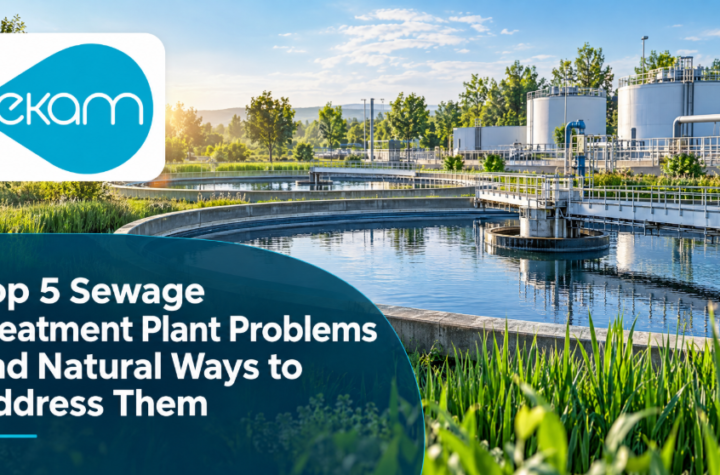
Sewage Treatment Plant Problems
Sewage treatment plants (STPs) help residential societies, commercial buildings, hotels, institutions and industries manage wastewater responsibly. When an STP does not perform as expected, the effects can be noticeable: unpleasant odours, cloudy treated water, excessive sludge, recurring equipment issues or rising operating costs. These symptoms can have several causes, so the most effective response is to investigate the process rather than rely on a quick fix. Good operation combines regular inspection, suitable biological treatment, preventive maintenance and testing against the plant’s design requirements. Natural or biological approaches may support some treatment goals, but they should be selected carefully and never treated as a substitute for proper engineering or regulatory compliance.
- Persistent odour
Odour is one of the most common complaints around wastewater facilities. It may develop when wastewater remains stagnant, organic matter decomposes without sufficient oxygen, sludge accumulates, or vents and covers are poorly maintained. Start by identifying where the smell is strongest and when it occurs. Inspect inlet chambers, collection pits, equalization tanks, sludge storage areas and drain lines. Check whether pumps are operating as scheduled and whether dead zones or blockages are allowing wastewater to sit for too long. At plants that use aeration, verify that the equipment is functioning within the operator’s prescribed range. Cleaning and desludging should follow a planned schedule and appropriate safety procedures. Biological additives may be considered only after the cause is understood and compatibility with the treatment process has been confirmed. Fragrance or masking agents do not solve the underlying issue.
- Poor treated-water quality
Cloudy effluent, unusual colour, suspended solids or inconsistent test results can point to a problem in one or more treatment stages. Possible causes include hydraulic overloading, inadequate settling, damaged filters, incorrect chemical dosing or a disruption in the biological process. Review the plant’s flow records and compare current loads with its design capacity. Check clarifier performance, sludge return arrangements, filter condition and any disinfection stage. Operators should record relevant parameters—such as pH, suspended solids, BOD or COD—according to the plant’s monitoring plan and local requirements. Avoid deciding that water is safe for reuse based on appearance alone. The permitted reuse application must match the quality achieved, and testing should be performed at the required frequency. If results remain outside limits, seek help from a qualified wastewater professional before changing process settings.
- Excessive sludge accumulation
Sludge is a normal by-product of many wastewater treatment processes, but uncontrolled accumulation can reduce tank capacity, interfere with settling and increase handling costs. Track sludge levels, wasting frequency and any changes in incoming wastewater. Excess solids may result from a higher organic load, poor process control or a maintenance routine that no longer matches actual operating conditions. Do not remove sludge randomly or make large adjustments without understanding the plant’s design. A trained operator can assess whether sludge wasting, return rates and tank cleaning need to be adjusted. Sludge should be handled, transported and disposed of in accordance with applicable requirements. Keeping accurate records makes it easier to spot gradual changes before they lead to major operational problems.
- Foaming and unstable aeration
Foam can arise from surfactants in incoming wastewater, changes in organic loading, certain microbial populations, or unsuitable aeration conditions. A sudden increase in foam may follow a change in cleaning products, production activity or wastewater flow. Inspect blowers, diffusers, air distribution and the appearance of the mixed liquor where relevant. Review whether the incoming wastewater has changed and whether the plant is receiving substances outside its design assumptions. Adding a defoamer may sometimes be appropriate, but it should not be the automatic first step: the product may affect downstream treatment, and it can hide a process issue that needs attention. Record when the foam occurs, how long it lasts and what operational changes coincide with it. Use that evidence to guide a measured response.
- High energy and maintenance costs
Pumps, blowers and other mechanical equipment can account for a substantial share of an STP’s operating expenses. Worn components, clogged filters, leaking pipes, unnecessary pumping and poor scheduling may increase energy use. Review equipment condition, operating hours, maintenance records and electricity consumption. Clean and service components according to manufacturer instructions, and make sure staff report unusual vibration, noise, heat or flow changes. Process settings should not be altered merely to reduce energy use; treatment performance and discharge or reuse requirements must remain protected. Training operators to log readings consistently can help identify inefficiencies and support decisions about repairs or equipment upgrades.
A responsible role for natural and biological solutions
The word “natural” can refer to biological processes, microbial products or lower-impact maintenance approaches, but it does not guarantee that a product will suit every STP. The wastewater composition, plant design, temperature, operating conditions and target outcome all matter. Before using a biological additive, request clear product information, compatibility guidance and credible performance evidence. Introduce changes in a controlled way and monitor the results. Never stop required disinfection, testing, desludging or equipment maintenance because an additive is being used. Natural approaches are most useful when they complement a well-managed treatment system.
Conclusion
The most reliable way to address STP problems is to identify the cause, review operating data and involve trained professionals when performance or safety is uncertain. Routine inspections, planned maintenance and appropriate testing can prevent small issues from becoming expensive failures. Facilities seeking further guidance can read Ekam Eco Solutions’ article, Top 5 Sewage Treatment Plant (STP) Problems & How to Fix Them Naturally. Use the guidance as a starting point and always confirm site-specific decisions against the plant design and applicable local requirements.



More Stories
How Eco-Friendly Cleaning Products Suppliers Improve Workplace Hygiene? | Ekam Eco Solutions
Is IFB an Indian Company? Complete Overview
Is Oppo an Indian Company? Complete Overview