

Businesses in MENA
Introduction
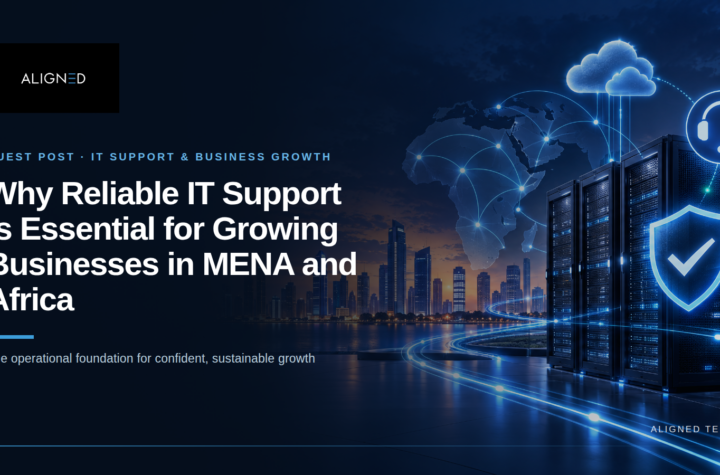
Technology now sits at the centre of almost every business process. Employees depend on connected devices, business applications, networks, cloud platforms and secure access to information to serve customers and complete daily work. When one of these systems fails, the impact can spread quickly: teams lose productive time, customers wait longer, and important operations may be interrupted. For growing organisations across the Middle East, North Africa and Africa, dependable IT support is therefore an operational requirement rather than an occasional technical convenience.
IT support is more than fixing broken devices
Traditional break-fix support begins after something goes wrong. Modern business IT support takes a broader approach. It can include monitoring networks and devices, troubleshooting user issues, managing updates, maintaining access controls, supporting business applications and helping teams recover from incidents. A structured support model also gives employees a clear route to request help and allows recurring problems to be identified instead of repeatedly treated as isolated events.
Why growing businesses need a support strategy
As a company expands, its technology environment usually becomes more complicated. New employees need accounts and equipment; additional locations need reliable connectivity; teams adopt more software; and customers expect services to remain available. Without consistent processes, these changes can create duplicated tools, unmanaged devices and security gaps. A support partner can help establish standards for onboarding, maintenance, documentation and escalation so that technology grows alongside the organisation.
Reducing downtime through proactive maintenance
Unplanned downtime is costly even when an outage lasts only a short time. Proactive maintenance helps reduce avoidable interruptions through device health checks, patching, backup reviews, network monitoring and timely replacement planning. Monitoring does not prevent every incident, but it can reveal warning signs such as unusual resource use, failing storage or connectivity instability. A documented response process then helps teams understand who is responsible and what steps should happen next.
Security belongs in everyday support
Cybersecurity is not separate from IT operations. Password practices, multi-factor authentication, endpoint protection, software updates, permissions and backup testing all influence the organisation’s risk. Employees also need practical guidance on phishing, suspicious attachments and safe handling of business information. Support arrangements should define how security incidents are reported, how access is removed when staff leave and how critical systems are restored. Organisations should select controls that fit their data, industry and applicable legal obligations.
Supporting hybrid and multi-location teams
Businesses operating across MENA and Africa may have staff working from offices, branches, customer sites or home. They need consistent access to approved systems without making security dependent on physical location. Remote support tools, secure connectivity, identity management and clear device policies can help maintain a reliable experience. Documentation is especially important when teams work across time zones or when local staff depend on remote specialists.
Choosing the right IT support model
Before selecting a provider, businesses should review response hours, escalation routes, service scope, reporting, security practices and experience with the technologies they use. It is useful to clarify which services are included, how urgent incidents are prioritised, whether on-site assistance is available where needed and how performance is reviewed. A good provider should explain its processes in plain language and make responsibilities clear rather than promising that every problem will disappear.
The role of an experienced technology partner
An external IT team can complement internal employees by providing specialist skills and a structured support process. The right arrangement depends on company size, risk, locations and internal capability. Aligned Tech presents IT support as part of a wider technology offering for organisations that also need cloud, AI and development services. Businesses can explore its IT support services and learn more about the company at Aligned Tech.
Conclusion
Reliable IT support helps businesses protect productivity, manage change and provide a more consistent experience for employees and customers. The most effective approach combines responsive help with proactive maintenance, sensible security controls and clear accountability. By treating IT support as an ongoing business function, growing organisations can build a stronger foundation for expansion.


More Stories
How NFC Stickers Are Helping Qatar Businesses Connect with Customers?
How NFC Digital Business Cards Are Changing Professional Networking in Qatar?
Why Blockchain Intellectual Property Protection Matters in the Digital Era?